 English▼



مدونة الموقع
اتصل بنا
- إذا كانت لديك أسئلة، يرجى الاتصال بنا، وسيتم الرد على جميع الأسئلة
- البريد الإلكتروني : David@tmaxcn.com
- البريد الإلكتروني : Davidtmaxcn@gmail.com
- إضافة : No. 39, Xinchang Road, Xinyang, Haicang Dist., Xiamen, Fujian, China (Mainland)
المنتجات الساخنة
مدونة
Battery Pack Assembly Process - Process & Equipment Guide
Setting up a pack line often creates bottlenecks in cell sorting, busbar jointing, and quality testing. Small misalignments during manufacturing lead to thermal risks or high internal resistance across modules. A standardized battery pack assembly process prevents these defects, ensuring stable throughput for energy storage and electric mobility projects. This practical guide examines core production stages, machinery integration, and inspection protocols required to build durable energy storage systems.
Incoming Inspection and Cell Matching
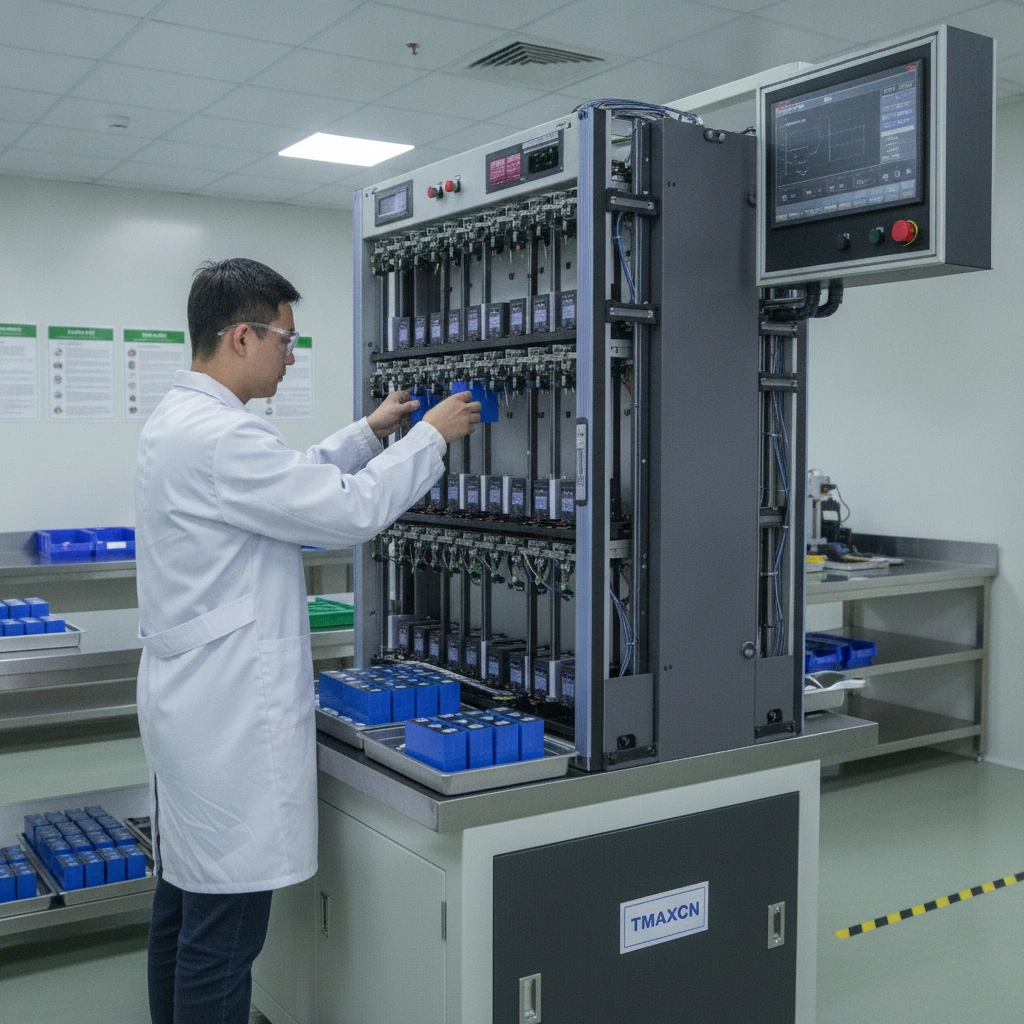
Cell preparation determines overall module performance. Incoming prismatic cells undergo rapid screening to verify open-circuit voltage and internal alternating-current resistance. Precise categorization prevents premature battery degradation and maintains uniform capacity across parallel strings.
Once graded, operators apply insulation materials to prevent short circuits between metallic casings. Automated paper sticking machines apply protective films before cells move toward structural grouping. Grouping fixtures then clamp the units firmly under preset tension, keeping the stack stable for downstream connections. High precision in this early phase ensures structural integrity under thermal expansion.
Laser Welding and Electrical Integration
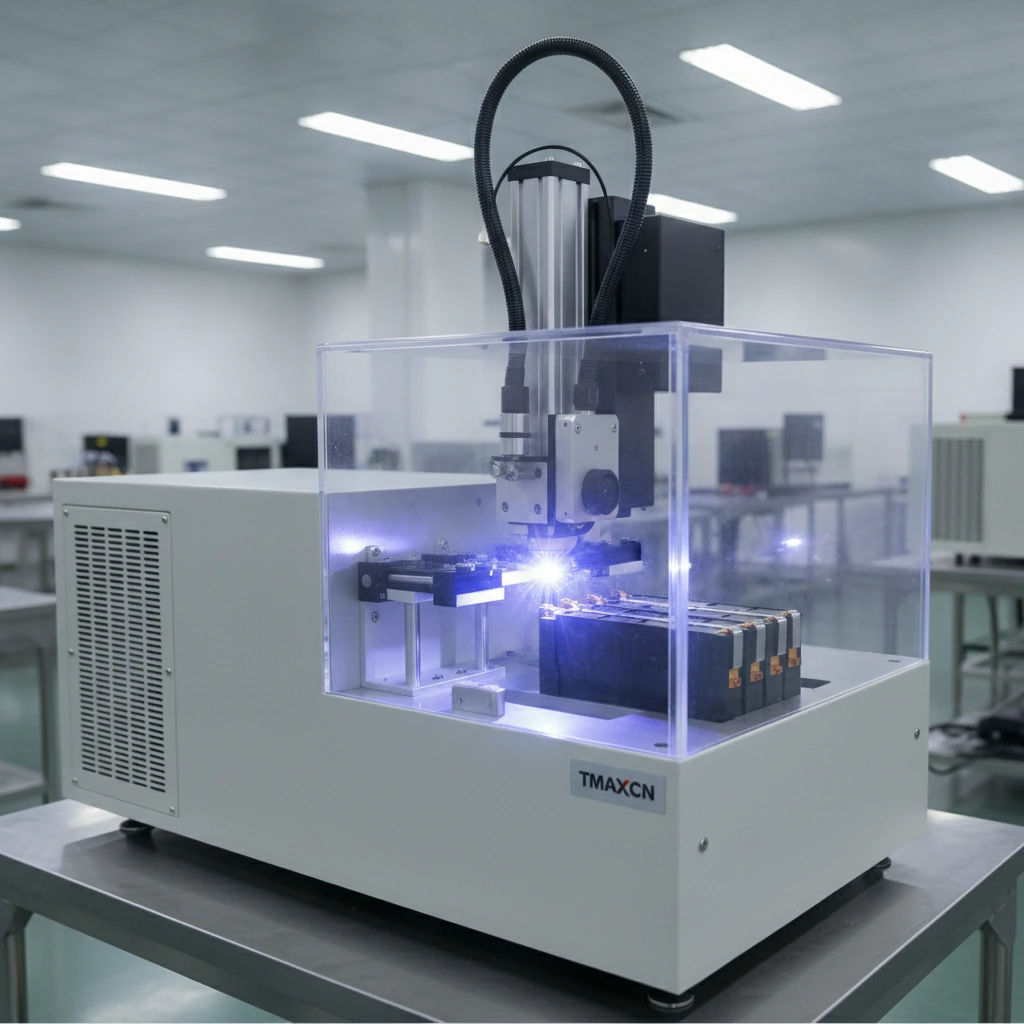
Electrical interconnection demands durable, low-resistance mechanical joints across cell terminals. Aluminum or copper busbars are positioned across the terminal posts of the aligned block. Precise joining techniques prevent excessive heat transfer into the internal jelly roll or cell cap.
High-power fiber laser systems execute accurate weld seams along the terminals. Engineers monitor weld penetration to avoid blowholes or excessive spatter. Proper tooling setup on the ensures stable contact pressure throughout the cycle. After welding, optical systems inspect weld bead uniformity, verifying electrical pathways before housing closure.
Enclosure Integration and BMS Harnessing
The welded core module transitions into the protective outer casing. Technicians connect voltage and temperature sensing leads, routing them directly to the battery management board. Secure harness routing prevents pinch points and electrical interference inside metal enclosures.
A complete incorporates automated compression, module fastening, and thermal interface material application. Thermal pads distribute heat evenly toward the lower heat sink plate. Once internal wiring is locked, structural fasteners secure the pack enclosure against moisture, dust ingress, and external vibration.
End-of-Line Quality and Aging Tests
The finalized enclosure undergoes exhaustive validation before dispatch. Comprehensive test stations evaluate total pack voltage, internal resistance, insulation resistance, and communication protocols. These functional checks confirm that the internal protective circuitry responds correctly to fault conditions.
The pack then enters an automated charge-discharge cycle using high-current cycling equipment. This aging phase stabilizes cell chemistry and detects latent infant-mortality defects. Standardizing these steps on a dedicated guarantees that every unit meets strict safety and output standards.
FAQ
Can lithium battery pack equipment handle different prismatic cell dimensions on one station?
Most modern tooling features adjustable clamping fixtures and programmable laser paths. Tooling changes require simple mechanical rail adjustments and software recipe selection, allowing factories to process various module formats without rebuilding core fixtures.
What is the typical lead time for a turnkey battery pack solution?
Standard production lines require eight to twelve weeks for fabrication, system integration, and factory acceptance testing. Delivery schedules depend on automation levels, custom tooling requirements, and shipping timelines from Xiamen port.
Does the battery pack assembly line comply with international safety certifications?
Standard assembly lines and electrical testing stations carry CE certification. The equipment integrates safety interlocks, optical light curtains, and emergency shutoff controls compliant with international industrial machinery directives.
 +86 13174506016
 David@tmaxcn.com


