 English▼



مدونة الموقع
اتصل بنا
- إذا كانت لديك أسئلة، يرجى الاتصال بنا، وسيتم الرد على جميع الأسئلة
- البريد الإلكتروني : David@tmaxcn.com
- البريد الإلكتروني : Davidtmaxcn@gmail.com
- إضافة : No. 39, Xinchang Road, Xinyang, Haicang Dist., Xiamen, Fujian, China (Mainland)
المنتجات الساخنة
مدونة
18650 Battery Tester
January 6,2026.
Xiamen Tmax Battery Equipments Limited was set up as a manufacturer in 1995, dealing with lithium battery equipments, technology, etc. We have total manufacturing facilities of around 200000 square foot and more than 230 staff. Owning a group of experie-nced engineers and staffs, we can bring you not only reliable products and technology, but also excellent services and real value you will expect and enjoy.
The 18650 battery is a widely used cylindrical lithiumion battery format, commonly found in laptops, power tools, ecigarettes, and even electric vehicles. To ensure the performance, safety, and longevity of these batteries, specialized testers are employed to evaluate their condition, capacity, voltage, internal resistance, and more. This article explores the principles, features, applications, and importance of 18650 battery testers.
●What is an 18650 Battery Tester?
An 18650 battery tester is a device designed to measure and analyze the key parameters of 18650 batteries. It helps users assess the health and performance of the battery by providing detailed information about its charge capacity, voltage, internal resistance, discharge rate, and overall condition. These testers are essential for diagnosing issues, ensuring safety, and extending the lifespan of 18650 batteries.
●Key Features of 18650 Battery Testers
1. Voltage Measurement
Measures the current voltage of the battery to determine its state of charge (SoC).
Helps identify overcharged or deeply discharged batteries.
2. Capacity Testing
Evaluates the actual capacity of the battery compared to its rated capacity.
Identifies wornout or counterfeit batteries with lowerthanexpected capacity.
3. Internal Resistance Measurement
Assesses the battery's internal resistance, which increases as the battery ages.
Higher resistance indicates reduced efficiency and potential overheating risks.
4. Discharge Rate Testing
Simulates different load conditions to measure how well the battery performs under varying discharge rates.
Useful for evaluating batteries intended for highdrain applications like power tools or flashlights.
5. Safety Checks
Detects issues such as short circuits, swelling, or leakage that could pose safety hazards.
Ensures compliance with safety standards for lithiumion batteries.
6. Data Logging and Analysis
Advanced testers can log data over time, allowing users to track battery performance trends.
Provides insights into battery degradation and optimal usage patterns.
●Types of 18650 Battery Testers
1. Simple Voltage Meters
Basic devices that only measure the battery's voltage.
Suitable for quick checks but lack advanced features.
2. Capacitance Meters
Measure the battery's capacity by discharging it at a controlled rate.
Provide a more accurate assessment of the battery's condition.
3. MultiFunction Testers
Combine multiple testing capabilities, including voltage, capacity, internal resistance, and discharge rate.
Ideal for professional use and comprehensive evaluations.
4. Smart Testers
Equipped with digital displays and software interfaces for realtime monitoring and analysis.
Often include connectivity options (e.g., USB, Bluetooth) for data export and remote control.
●Importance of Testing 18650 Batteries
1. Performance Evaluation
Ensures the battery meets its rated specifications and performs optimally in its intended application.
2. Safety Assurance
Identifies faulty or damaged batteries that could lead to overheating, fire, or explosion.
3. Cost Savings
Helps avoid purchasing counterfeit or lowquality batteries by verifying their true capacity.
4. Longevity Enhancement
By identifying issues early, users can take corrective actions to extend the battery's lifespan.
5. Environmental Impact Reduction
Prevents unnecessary disposal of functional batteries by accurately assessing their condition.
●Applications of 18650 Battery Testers
1. Consumer Electronics
Testing batteries for laptops, tablets, and other portable devices.
2. Power Tools
Evaluating batteries used in drills, saws, and other highpower tools.
3. ECigarettes and Vape Pens
Ensuring safe and reliable operation of batteries in vaping devices.
4. Electric Vehicles (EVs)
Assessing individual cells in EV battery packs during maintenance or repair.
5. Renewable Energy Systems
Monitoring backup batteries in solar panels and wind turbines.
6. DIY Projects
Helping hobbyists and enthusiasts build custom battery packs for various applications.
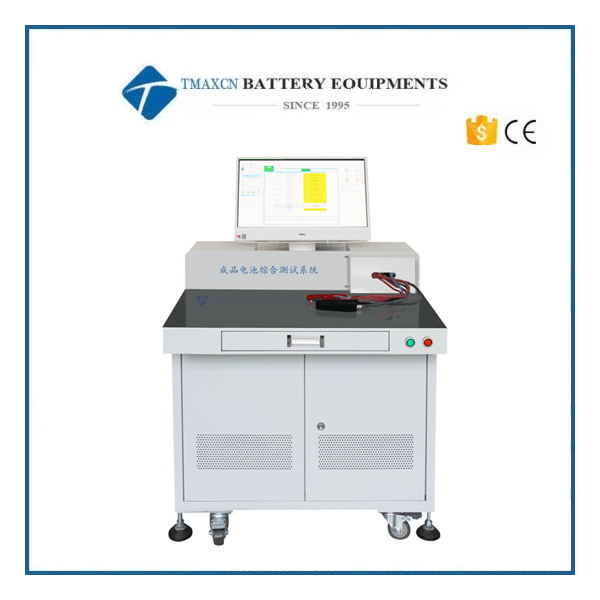
18650 Battery Pack Integrated Tester
●Challenges in Using 18650 Battery Testers
1. Complexity
Advanced testers may require technical knowledge to operate effectively.
2. Calibration
Regular calibration is necessary to maintain accuracy.
3. Compatibility
Some testers may not support all types of 18650 batteries or additional chemistries (e.g., LiFePO4).
4. Cost
Highend testers with advanced features can be expensive.
●Innovations in 18650 Battery Testing Technology
To address these challenges and enhance performance, manufacturers are incorporating cuttingedge technologies:
1. Automated Testing Systems
Fully autonomous systems that streamline the testing process and reduce human error.
2. IoT Integration
Connectivity to smart systems for remote monitoring, data logging, and predictive maintenance.
3. AIPowered Analysis
Artificial intelligence algorithms to interpret test results and provide actionable recommendations.
4. Portable Designs
Compact and lightweight testers for onthego use in field applications.
5. Energy Efficiency
Improved power management to reduce energy consumption during testing.
●The Future of 18650 Battery Testing
As battery technology continues to evolve, so too will the tools used to test them. Key trends shaping the future include:
1. Increased Automation
Fully automated systems will optimize testing processes and reduce manual intervention.
2. Focus on Sustainability
Ecofriendly designs and energyefficient operations will become standard.
3. Integration with Emerging Technologies
Combining testing with AI, IoT, and cloud computing for smarter diagnostics and analysis.
4. Development of New Materials
Adapting testers to accommodate nextgeneration battery chemistries, such as solidstate or graphenebased batteries.
5. Global Standards Compliance
Ensuring compatibility with evolving international regulations for battery testing.
●Conclusion
18650 battery testers play a critical role in ensuring the performance, safety, and longevity of lithiumion batteries across various industries. Their ability to provide detailed insights into battery health makes them indispensable for professionals, hobbyists, and consumers alike.
What excites you most about the advancements in 18650 battery testing technology? Share your thoughts below! Together, let’s explore how these innovative tools can shape the future of battery diagnostics and optimization.
 +86 13174506016
 David@tmaxcn.com

